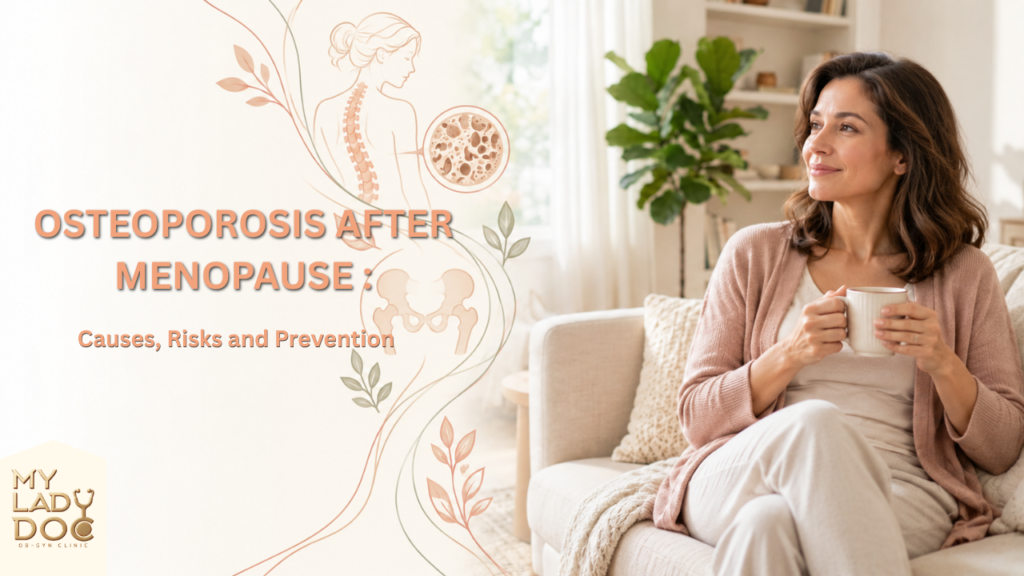
A drop in estrogen after menopause can speed up bone loss, which is why osteoporosis becomes more likely as women get older. The tricky part is that osteoporosis usually develops silently. You are unlikely to feel your bones getting weaker until a fracture actually happens.
That makes the years around and after menopause a genuinely useful time to pay attention to bone health. Not every postmenopausal woman goes on to develop osteoporosis, and menopause on its own does not mean you automatically need medication. Your age, family history, body weight, lifestyle, medical conditions, other medicines, fracture history and bone density all factor into your personal risk.
The encouraging part is that bone loss can be identified and managed well before it becomes a serious problem. A healthy diet, the right kind of exercise, fall prevention, and treatment when it is genuinely indicated can all reduce fracture risk. For some women, hormone therapy or osteoporosis-specific medicines may also come into the picture depending on their individual health history.
Why does osteoporosis become more common after menopause?
Estrogen is one of the hormones that helps keep bone strong. Before menopause, the estrogen your ovaries produce keeps the constant process of breaking down old bone and building new bone reasonably balanced.
After menopause, estrogen levels fall substantially, and that shifts the pace of bone remodeling. Bone can start being broken down faster than it is replaced, and this loss tends to be especially rapid around the menopausal transition and in the early postmenopausal years.
That does not mean every woman will develop osteoporosis. Some lose relatively little bone over time, while others carry several risk factors that stack up against them.
Age plays a role too. Bone naturally changes throughout adulthood, and the effects of getting older layer on top of the changes brought on by lower estrogen. The bones most commonly affected by osteoporosis are the hip, spine and wrist, and a fracture in any of these areas can genuinely affect mobility, independence and quality of life.
What exactly is osteoporosis?
Osteoporosis is a condition where bone becomes less dense and weaker, which raises the likelihood of fractures. Healthy bone is living tissue: throughout your life, old bone is continuously removed and new bone is formed. Osteoporosis develops when that balance shifts far enough that overall bone strength drops.
There is also an earlier stage called osteopenia, where bone mineral density sits below the usual range but does not meet the definition of osteoporosis. Osteopenia does not mean a fracture is inevitable. Some women with osteopenia stay stable for years, while others lose bone more quickly.
A bone-density number is only one piece of the puzzle, and doctors weigh several other factors that influence fracture risk rather than reading the scan in isolation. This matters because a woman can have a bone-density result that falls outside the osteoporosis range and still carry a meaningful fracture risk based on her broader health and history.
Does menopause itself cause osteoporosis?
Menopause raises the risk of bone loss, but it does not mean osteoporosis is unavoidable. The main link is the decline in estrogen. During the first several years after menopause, bone loss can speed up because that protective effect of estrogen fades, and ACOG notes this rapid loss commonly occurs during those early postmenopausal years.
Several other factors can add to the risk on top of menopause itself: older age, a low body weight, having a parent with a hip fracture or osteoporosis, smoking, higher alcohol intake, limited physical activity, low intake or absorption of calcium and vitamin D, certain medical conditions, long-term use of medicines that can weaken bone (including some corticosteroids), previous fractures from relatively minor falls or injuries, and earlier-than-usual menopause or prolonged periods of low estrogen.
Having one of these does not mean you have osteoporosis. It simply means your healthcare professional may want to look at your bone health more closely.
Osteoporosis is often silent
One of the hardest things about this condition is that there may be no obvious symptoms at all. You cannot reliably judge how strong your bones are by whether or not you feel pain, and a woman can have significant bone loss while still feeling completely fine.
A fracture is often the first real sign that bone strength has dropped too low, commonly involving the hip, spine or wrist, although other bones can be affected as well. Spinal fractures in particular can sometimes happen without any dramatic accident, and repeated vertebral fractures may contribute to back pain, loss of height, or a change in posture over time.
This is exactly why waiting for symptoms is not a reliable way to assess bone health. If you have gone through menopause and carry risk factors for osteoporosis, it is worth asking your gynecologist or another healthcare professional whether a bone-density assessment makes sense for you.
Who should be screened for osteoporosis after menopause?
Screening decisions come down to age and individual fracture risk rather than a blanket rule. The 2025 U.S. Preventive Services Task Force recommends osteoporosis screening for women aged 65 and older, and it also recommends screening postmenopausal women younger than 65 who are at increased risk based on a clinical risk assessment.
In other words, a younger postmenopausal woman with significant risk factors should not simply assume she has to wait until 65. Your healthcare professional may look at your age and menopausal status, body weight, family history of hip fracture, smoking, alcohol intake, previous fractures, certain medical conditions, and any medicines that can contribute to bone loss.
A formal fracture-risk tool may also come into play. FRAX is one well-known example, and it estimates the likelihood of certain fractures over a future period using information like age, body measurements, smoking, alcohol use, medical history, and bone density when available. ACOG describes FRAX as a useful tool for assessing fracture risk. Either way, the decision about screening should be individualized rather than based on menopause alone.
What is a DXA scan?
A DXA scan, sometimes called a DEXA scan, is the most common test used to measure bone mineral density, or BMD, which refers to the amount of minerals such as calcium contained in a particular area of bone. Lower density generally means weaker bone.
A central DXA usually measures the hip and spine, since these are important sites for fracture risk. The test itself is quick, painless, and uses a low level of radiation. You typically lie on a padded table while the machine measures your bones; there is no injection involved and no surgery required.
What do the DXA numbers actually mean?
For postmenopausal women, the DXA report commonly includes something called a T-score. Broadly speaking, a T-score of -1 or higher is considered within the normal bone-density range, a score between -1 and -2.5 indicates low bone density (commonly called osteopenia), and a T-score of -2.5 or lower at an appropriate measurement site is consistent with osteoporosis.
These numbers should never be read in isolation from the rest of your clinical picture. Your doctor may also consider whether you have already had a fragility fracture, meaning a fracture that occurs from relatively low-impact trauma, such as falling from standing height.
What can increase bone loss after menopause?
Some women have more than one of these factors working together at once.
Genetics genuinely influence bone density and fracture risk, so a parent who has had a hip fracture becomes an important part of your own medical history. Being underweight can be associated with lower bone mass and a greater risk of fractures, and if you have unintentionally lost weight after menopause, that is worth flagging to your healthcare professional. Smoking is linked to poorer bone health, so quitting benefits bone strength along with just about everything else. Higher alcohol intake can raise fracture risk and contribute to falls, which is why limiting it is part of a bone-friendly lifestyle. Bones also respond to mechanical loading, so low physical activity works against you, while regular weight-bearing and resistance exercise supports both bone and muscle health.
Certain medicines and health conditions can accelerate bone loss too. Long-term corticosteroid use is one well-known example, and thyroid disorders, problems affecting nutrient absorption, certain inflammatory diseases, and other medical conditions can all influence bone health as well. If bone loss shows up earlier than expected, your doctor may look into whether there is an underlying cause behind it.
Can diet actually help protect your bones?
Yes, nutrition is a genuinely important part of maintaining bone health, though food alone cannot reverse significant osteoporosis once it has developed. Calcium provides an important structural component of bone, vitamin D helps your body absorb that calcium, and protein along with other nutrients supports muscle and overall health.
Good dietary sources of calcium include dairy products, calcium-fortified foods, tofu made with calcium, certain leafy vegetables, and some fish eaten with their bones. Rather than fixating on one particular food, it is more useful to aim for a varied diet that provides enough protein, calcium, vitamin D, fruits and vegetables.
Supplements are not automatically necessary for every postmenopausal woman. How much you actually need depends on your diet, health status, nutritional intake, and sometimes blood-test results, and taking large amounts of supplements without medical advice is not a substitute for a proper osteoporosis assessment. If you have osteoporosis or a high fracture risk, ask your healthcare professional whether you are getting enough calcium and vitamin D from food alone and whether supplementation genuinely makes sense for you.
Exercise after menopause: what actually helps your bones?
Exercise is one of the most practical ways to support both bones and muscles after menopause. Weight-bearing activity places healthy mechanical stress on bones, so things like walking, stair climbing, and dancing, where you are supporting your own body weight, all count. Resistance training helps too, since stronger muscles improve physical function and can reduce your risk of falling, and balance exercises become particularly valuable as women get older.
That said, the safest exercise program depends on your current bone density and overall health. If you already have osteoporosis, especially with a history of a vertebral or other fragility fracture, do not suddenly jump into high-impact exercise or heavy lifting without professional guidance first. A physiotherapist or a trained exercise professional can help adapt a program to your specific needs, and NIAMS specifically recommends tailoring exercise to the individual and taking precautions against excessive strain when osteoporosis is present.
The goal here is not to avoid movement altogether. It is to choose movement that suits your bones, muscles, joints, balance and overall health.
Fall prevention matters just as much as bone strength
Even a strong bone can fracture if the force of a fall is significant enough, which is why fracture prevention involves more than just improving bone density. Reducing your chance of falling becomes increasingly important as you get older.
At home, a few simple measures genuinely help. Keep floors and walking areas free of clutter, secure or remove loose rugs, keep frequently used items within easy reach, make sure rooms and stairways have adequate lighting, use handrails on stairs, and wear stable footwear. It is also worth discussing any medicines that cause dizziness or drowsiness with your healthcare professional, and having vision or balance problems assessed when appropriate. Muscle strength and balance training can help keep you steadier on your feet too.
Treatment depends on your actual fracture risk
Not every woman with low bone density needs medication. Treatment decisions depend on your DXA results, age, previous fractures, estimated fracture risk, medical conditions and other medicines you take. For women diagnosed with osteoporosis, or considered to have a high enough fracture risk, several evidence-based options exist, and the right choice should be individualized rather than one-size-fits-all.
Bisphosphonates
Bisphosphonates are a group of medicines that slow bone breakdown. They are commonly used in osteoporosis treatment and can meaningfully reduce fracture risk in the right patients. Different medicines in this group are taken in different ways, so your doctor will consider which option suits you best.
Denosumab
Denosumab is another medicine used for osteoporosis in people with an appropriate fracture risk, and it works by reducing bone breakdown as well. Because osteoporosis medicines vary in their effects, and stopping or switching some of them requires careful planning, they should always be managed with a healthcare professional rather than started or stopped on your own.
Other osteoporosis medicines
For women at particularly high fracture risk, other medicines that stimulate new bone formation or work through different pathways altogether may be considered. Which one is appropriate depends on the severity of bone loss, fracture history, medical conditions, previous treatment and other individual factors.
Hormone therapy
Hormone therapy can help prevent the bone loss that occurs around menopause, since estrogen has a protective effect on bone. ACOG notes that systemic estrogen therapy protects against the bone loss that happens early in menopause. That said, hormone therapy is not automatically the right osteoporosis treatment for every woman.
The decision depends on your age, menopause symptoms, medical history, breast and uterine health, cardiovascular and clotting risk, and other individual factors. Hormone therapy carries both benefits and risks, so it should always be discussed individually with a qualified healthcare professional. Women with early or premature menopause may have particular reasons to bring this up, since prolonged low estrogen exposure can affect bone health more significantly.
What if you have osteopenia rather than osteoporosis?
Hearing the word “osteopenia” can be worrying, but it does not mean a fracture is certain. It means bone density sits below the usual range without meeting the DXA definition of osteoporosis. Some women with osteopenia need only lifestyle measures and periodic monitoring, while others carry enough additional fracture risk to benefit from medication.
Your doctor may weigh your age, previous fractures, family history, bone-density results and overall fracture risk together. ACOG notes that for some women with stable osteopenia and no fracture history, exercise, appropriate calcium and vitamin D intake, avoiding smoking, and limiting alcohol may be the main focus rather than medication. The right approach really is not “osteopenia equals medication” or “osteopenia means nothing to worry about.” It depends on the individual.
Can osteoporosis be reversed?
Osteoporosis can be treated, but it is more accurate to think in terms of improving bone strength and reducing fracture risk than promising a full reversal. Treatment can slow bone loss, maintain or improve bone density in some people, and lower fracture risk overall, though the response varies depending on the medication used, your starting bone density, underlying causes, how consistently you follow treatment, and other health factors.
Bone health also needs ongoing attention rather than a single check-and-done approach. A normal scan today does not mean your future risk can never change, particularly as you age or develop new medical conditions. Your doctor can advise on whether and when repeat bone-density testing makes sense, since there is no single testing interval that applies to every woman.
When should you talk to a doctor about your bones?
You do not have to wait for a fracture before asking about osteoporosis. It is worth raising bone health with your gynecologist or healthcare professional if you have gone through menopause and have concerns about fracture risk, went through menopause unusually early, have a parent with a hip fracture or osteoporosis, have had a fracture after a relatively minor fall or injury, have a low body weight or significant unintentional weight loss, smoke or drink heavily, have been on long-term corticosteroids, have a medical condition that may affect bone health, have already been told you have osteopenia or osteoporosis, are noticing loss of height or persistent back pain, or simply want to know whether you need a DXA scan.
A new fracture after menopause deserves medical evaluation, particularly if the injury that caused it was minor.
Warning signs that need prompt medical attention
Osteoporosis itself does not usually cause an emergency symptom on its own; the real concern is an injury or fracture that may have happened because your bones have become fragile. Seek prompt medical care if you have severe pain after a fall, an obvious deformity, an inability to put weight on a limb, or sudden severe back pain following minor trauma. A possible hip fracture, for example, can make standing or walking extremely difficult and needs urgent assessment.
Do not assume persistent back pain is simply “part of aging.” Vertebral fractures can cause back pain along with changes in posture or height, and they deserve proper medical evaluation rather than being brushed aside.
What can you do now to protect your bone health?
You do not need to make ten major changes at once. Start with what is realistic for you.
Get a sense of your risk by asking whether your age, menopause history, family history, medicines, medical conditions, and previous fractures suggest that a bone-density assessment would be worthwhile. Keep moving with regular weight-bearing activity, strength training, and balance exercises suited to your fitness and health. Eat for bone and muscle health by making sure your diet provides enough calcium, vitamin D, protein and other nutrients, and talk to a healthcare professional or dietitian if you are unsure about your intake.
Avoid smoking, since quitting benefits bone health along with your heart, lungs and overall health, and limit alcohol, since higher intake can raise fracture risk and contribute to falls. Make your home safer by reducing tripping hazards, improving lighting, and addressing anything that makes falls more likely. Do not ignore early menopause either; if it happened earlier than expected for you, ask about what that means for your bone health, since the cause and duration of low estrogen exposure can shape how your doctor approaches prevention.
And when treatment is genuinely indicated, do not rely on lifestyle measures alone. They are important, but they do not replace osteoporosis medication when your fracture risk is high enough to warrant it.
The Bottom Line
Osteoporosis after menopause is closely tied to the decline in estrogen that happens during and after this transition, but not every woman will develop the condition. Bone loss can happen without pain or any obvious symptoms, which is exactly why assessing your risk and screening at the appropriate age can genuinely make a difference.
If you are postmenopausal, it is worth asking yourself a simple question: do I actually know my osteoporosis risk? If you have risk factors, a history of a low-impact fracture, early menopause, or general concerns about bone health, discussing them with a gynecologist is a sensible next step.
At MyLadyDoc, Dr. Hiba Gul provides gynecological care that can include conversations around menopause, hormonal changes, preventive health, and when further evaluation is appropriate. If you are concerned about bone loss after menopause, a consultation can help determine whether you need risk assessment, a DXA scan, lifestyle guidance, or referral for osteoporosis management.