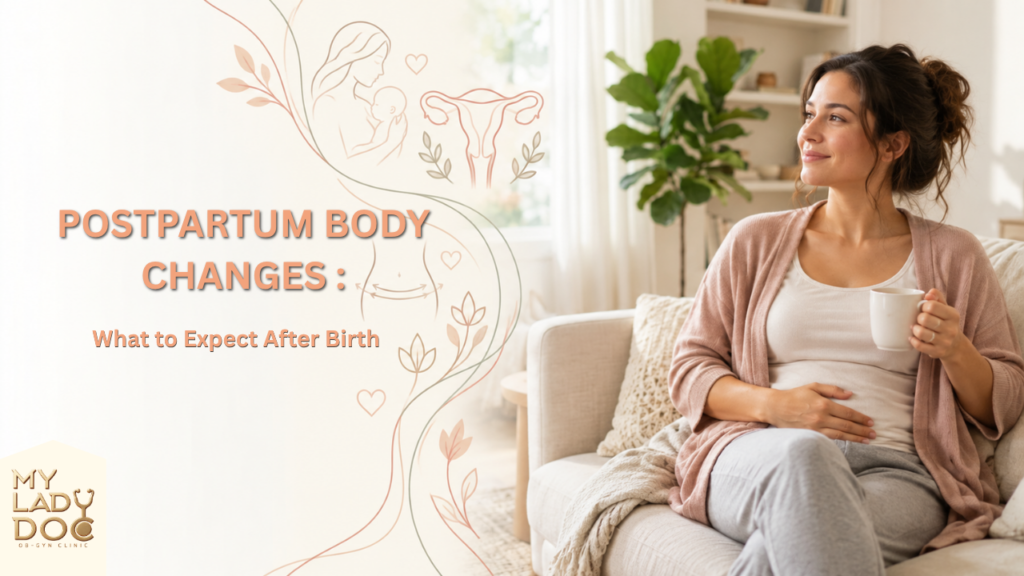
Your body does not snap back to its pre-pregnancy state the moment your baby arrives. The uterus needs time to shrink, hormones shift rapidly, milk production begins, the pelvic floor has to recover, and your period may take months to return. Some of this is expected. Some of it deserves a proper medical look.
The weeks after birth are not just about caring for a newborn. They are also a period of real physical and emotional recovery for the mother, and the World Health Organization recommends ongoing postnatal care during this time, covering physical health, bleeding, infection risk, blood pressure, nutrition and mental health.
Every woman recovers differently. Your own experience depends partly on whether you had a vaginal birth or a caesarean, whether you needed stitches or had complications, whether you are breastfeeding, and your general health going into pregnancy. Knowing roughly what to expect can make some of these changes feel less alarming, and it can also help you recognize when something is actually worth getting checked.
What happens to your body right after birth?
Childbirth is really the beginning of another major stretch of physical adjustment. The uterus, which expanded considerably during pregnancy, starts contracting and gradually getting smaller. You may feel cramping, especially while breastfeeding, since feeding triggers hormones that encourage the uterus to contract. Vaginal bleeding also begins as your body sheds blood and tissue from where the placenta was attached.
You might also notice vaginal soreness or swelling, stitches from a tear or episiotomy, weaker abdominal muscles, full or tender breasts, heavier sweating, constipation, urinary leakage, exhaustion, emotional ups and downs, and changes in appetite or thirst. None of this automatically signals a problem.
That said, care should not simply stop the moment you leave the hospital. The WHO is clear that women need ongoing monitoring and support after birth, partly because certain complications only develop during the postnatal weeks.
Postpartum bleeding: what counts as normal?
Vaginal bleeding after childbirth is called lochia, and it is a different thing entirely from a menstrual period. It happens because the uterus is healing after the placenta separates from the uterine wall. The bleeding tends to be heaviest at first and gradually lightens, changing colour as recovery continues. You will likely see bright red blood in the first days, which slowly turns darker or brownish before eventually becoming lighter and stopping altogether.
Breastfeeding can temporarily make the bleeding look heavier, because feeding triggers the uterus to contract, and you may notice period-like cramps at the same time.
When is postpartum bleeding not normal?
Heavy or suddenly worsening bleeding is not something to brush off. Seek care promptly if bleeding is sudden or very heavy, especially alongside faintness, dizziness, unusual weakness or a racing heart, since these can be signs of postpartum haemorrhage. You should also reach out if the bleeding develops an unpleasant smell, particularly with fever, abdominal pain, or a general sense of feeling unwell, since that can point to infection. Very heavy bleeding is not simply “part of recovery” that you have to sit with.
Your uterus is still doing a lot of work
During pregnancy the uterus grows substantially to make room for your baby. After delivery it gradually contracts back toward its pre-pregnancy size, a process called uterine involution. The cramping you feel as this happens can be more noticeable while breastfeeding, and how intense it is varies quite a bit from woman to woman.
Your abdomen may also keep looking somewhat pregnant for a while, and that is entirely normal. The abdominal wall has stretched throughout pregnancy, and the uterus itself simply takes time to shrink. There is no expectation that your body should look like its pre-pregnancy self immediately after delivery.
Why does your tummy still look pregnant after birth?
Plenty of women are caught off guard by how much their abdomen still protrudes after delivery. A few things are usually behind this. The uterus has not yet returned to its usual size, the abdominal muscles have stretched during pregnancy, the abdominal wall may feel weak, posture and core strength have shifted, and general fluid changes can affect how your body looks and feels day to day.
Some women also develop diastasis recti, a separation or widening of the abdominal muscles along the midline. It is common during and after pregnancy and can cause a visible bulge or a sense that your core has lost its strength. A healthcare professional or physiotherapist can assess the abdominal wall and suggest suitable exercises if needed.
Trying to force your body back into shape too quickly is not really the point of early postpartum recovery. Your body has just been through pregnancy and childbirth. Healing comes first.
Breast changes after childbirth
Breast changes can happen fast after delivery. At first, the breasts produce colostrum, a thick, yellowish fluid that gives your newborn early nutrition. As your milk comes in, the breasts often become fuller, heavier and more tender.
You may notice fullness, tenderness, leaking, changed nipple sensitivity, temporary engorgement, or a shift in breast size. Breastfeeding itself can take real time to establish, and struggling with positioning, latch, milk transfer or breast pain does not mean you are doing something wrong. If feeding hurts or you are worried about it, getting help early tends to make a real difference.
When should breast pain get checked?
Some discomfort is a normal part of milk coming in, but severe or worsening pain, a hot or red patch, fever, or generally feeling unwell should be discussed with a healthcare professional rather than assumed to be routine. Breast symptoms can have more than one cause, so it is worth having anything persistent or concerning looked at.
Your vagina and pelvic area may feel different
After a vaginal birth, the tissue around the vagina can be swollen, bruised or sore, and if you had a tear or episiotomy, you will likely have stitches too. These tissues need time to heal, and it is common for sitting, walking, urinating or having a bowel movement to feel uncomfortable in the early weeks. Keeping the area clean and following your care team’s instructions supports healing.
The experience is different after a caesarean, but that does not mean the pelvic area escapes unaffected, since pregnancy itself places real stress on the pelvic floor and surrounding tissues regardless of how you delivered. If pain stays significant, gets worse, or interferes with daily life beyond the expected healing window, mention it at your postpartum check.
Pelvic floor changes are common
The pelvic floor is a group of muscles and connective tissue that supports organs like the bladder, bowel and uterus, and pregnancy plus childbirth can place considerable strain on it. Some women notice urine leakage when coughing, laughing or sneezing, a feeling of pelvic heaviness, trouble controlling gas or bowel movements, reduced pelvic floor strength, discomfort during sex, or a sense that something is bulging or coming down.
Urinary leakage after childbirth is relatively common, but common does not mean you have to just live with it. Pelvic floor exercises help many women, and persistent symptoms can be assessed by a doctor or a pelvic health physiotherapist. If you have ongoing pressure, a vaginal bulge, significant leakage, or difficulty controlling bowel movements, get it looked at rather than waiting for it to resolve on its own.
Why can sex feel different after childbirth?
It is genuinely common for sex to feel different after having a baby. Several things can contribute, including vaginal or perineal healing, stitches or scar tissue, pelvic floor changes, vaginal dryness, breastfeeding-related hormonal shifts, exhaustion and lack of sleep, fear of pain, emotional changes, and shifts in body image.
Vaginal dryness in particular can show up during breastfeeding, since lower estrogen levels affect vaginal lubrication. Pain during sex should not just be accepted as your new normal. If intercourse is still painful after you have healed, or you are worried about your sexual health more broadly, talk to your gynecologist. There may well be a treatable reason behind the discomfort.
When will your period come back?
There is no single date when this happens for everyone. The timing depends partly on whether you are breastfeeding and how often your baby feeds. Women who are not exclusively breastfeeding may see their first period relatively soon after birth, while exclusive breastfeeding tends to delay its return.
Your first few periods after delivery may also look different from what you were used to before pregnancy. They can be heavier, lighter, longer, shorter or generally less predictable, and that shift on its own does not necessarily point to a problem. Unusually heavy bleeding, severe ongoing pain, or other concerning symptoms are worth raising with a healthcare professional, though.
Can you get pregnant before your first period?
Yes. Ovulation can happen before your first postpartum period, which means pregnancy is possible even before your periods return. The NHS notes that pregnancy can occur as early as three weeks after childbirth, including in women who are breastfeeding and have not yet had a period. If you do not want another pregnancy right away, talk to your doctor about postpartum contraception. Breastfeeding alone should not be assumed to fully protect against pregnancy.
Postpartum weight changes
Weight does not disappear the moment you deliver. Some pregnancy-related weight is lost during birth and the early days after, but the rest of it shifts more gradually as your body works through stored energy, changing fluid balance, and a lower activity level while you recover. Breastfeeding affects your energy needs too.
There is no single timeline that every woman is medically expected to follow to “lose the baby weight,” and your recovery should genuinely take priority over chasing a particular shape quickly. A balanced diet, enough hydration, sleep whenever you can get it, and a gradual return to activity tend to support recovery far better than a restrictive plan. If your delivery was complicated, involved significant blood loss, anemia, or another health issue, your doctor may suggest a more individualized recovery approach.
Postpartum hair loss can be surprising
Some women notice a lot more hair shedding in the months following childbirth, which is usually tied to the normal hair growth cycle combined with hormonal changes after pregnancy. During pregnancy, hormones tend to keep more hairs in their growth phase than usual. Once those hormone levels shift after delivery, a larger batch of hairs can enter the shedding phase around the same time, which is what makes it look so dramatic.
Postpartum shedding is usually temporary. Still, significant or prolonged hair loss can have other causes too, including nutritional deficiencies or thyroid issues, so if it feels severe, drags on, or comes with other symptoms, mention it to your doctor.
Skin changes may stick around after delivery
Pregnancy-related skin changes do not necessarily vanish once your baby is born. You may notice stretch marks, darkening around the nipples, a darker line down the abdomen, other pigmentation changes, acne or altered skin texture, and increased skin sensitivity. Hormonal shifts after pregnancy influence the skin, and some of these changes gradually fade with time, though not always completely.
Stretch marks in particular often lighten but do not necessarily disappear entirely, and that is simply a normal physical consequence of the skin stretching during pregnancy. Your postpartum body does not need to be “fixed” just because it looks different from before.
Constipation and hemorrhoids after birth
Bowel movements can be uncomfortable after delivery, particularly if you have stitches, hemorrhoids, general pelvic soreness, or fear of straining, and constipation can make all of this worse. Drinking enough fluids, eating fiber-rich foods, and staying gently active where medically appropriate can help keep things moving. If constipation persists, your doctor or pharmacist can advise on whether a stool softener or laxative would help.
Hemorrhoids, also called piles, are common after pregnancy and childbirth and can cause itching, discomfort, swelling, or bleeding with bowel movements. Persistent rectal bleeding should not be automatically written off as just hemorrhoids; if it continues, get it checked.
Postpartum fatigue is more than being tired
Sleep deprivation is a huge part of early parenthood, but postpartum fatigue often has several contributors layered together. You may be recovering from labor or surgery while feeding a baby around the clock. Blood loss during childbirth can contribute to anemia, and hormonal shifts, emotional stress and inadequate nutrition can all sap your energy as well.
If you feel exhausted to the point where you genuinely struggle to function, tell your doctor. Depending on your symptoms, they may consider whether anemia, thyroid problems, infection, sleep deprivation, a mood disorder, or something else could be part of the picture.
Emotional changes after childbirth
Your emotional health deserves the same attention as your physical recovery. Many women go through mood swings in the first days after birth, feeling tearful, overwhelmed, or emotionally raw as part of the adjustment. That is common and usually settles.
Persistent sadness, anxiety, hopelessness, severe irritability, a loss of interest in things you normally enjoy, or difficulty bonding with your baby is different and deserves professional attention. Postpartum depression and anxiety are medical conditions, not proof that you are somehow a bad mother, and the WHO includes maternal mental health assessment as part of quality postnatal care. If you ever have thoughts of harming yourself or your baby, seek urgent help immediately and do not sit with those thoughts alone.
Blood pressure can still be an issue after delivery
Pregnancy-related blood pressure problems do not always end the moment the baby arrives. Postpartum preeclampsia can develop after delivery and may need urgent treatment. Warning symptoms include a severe or persistent headache, changes in vision, significant upper abdominal pain, shortness of breath, sudden swelling or feeling generally very unwell, and high blood pressure on measurement.
The WHO recommends monitoring for postpartum complications, including preeclampsia, as a standard part of postnatal care. If severe symptoms show up after childbirth, do not wait for a routine follow-up appointment to get them checked.
When should you seek urgent medical care?
Most postpartum changes are manageable, but a few symptoms call for prompt assessment rather than waiting it out. Get urgent care for sudden or very heavy vaginal bleeding, fainting, severe dizziness or marked weakness, chest pain or difficulty breathing, a severe headache with vision changes, severe abdominal or pelvic pain, high fever or chills with feeling unwell, a painful, swollen or red calf (particularly on one side), a wound that is becoming more painful, red or swollen, foul-smelling discharge with fever or abdominal pain, or severe emotional distress and thoughts of harming yourself or your baby.
These can stem from a range of causes, including bleeding, infection, blood clots, or blood pressure complications, and the WHO specifically flags heavy bleeding, fever, abdominal pain, headache with visual symptoms, one-sided calf symptoms, shortness of breath and chest pain as warning signs that need medical attention.
Recovery after a caesarean birth
A caesarean is major abdominal surgery, so recovery involves both the usual postpartum changes and healing from the operation itself. The incision may feel sore, tight, numb or generally uncomfortable for a while, and you will likely need to modify lifting, movement and exercise as the wound heals, following your care team’s guidance.
Try not to compare your recovery to someone else’s. A woman who had a vaginal birth may deal with significant pelvic or perineal symptoms, while a woman who had a caesarean may be managing abdominal surgical pain instead. Both deserve equally appropriate postpartum care. Contact your doctor if the incision becomes increasingly red, swollen, painful, or starts producing discharge, particularly alongside a fever.
When can you start exercising again?
There is no single exercise schedule that fits every woman. Gentle movement can genuinely help during recovery once you are medically well enough for it, but the pace should be shaped by your delivery, your symptoms, and any complications you had.
Pelvic floor exercises are commonly recommended after childbirth, especially where urinary leakage or pelvic floor weakness is present, and persistent symptoms can warrant an assessment from a pelvic health physiotherapist. More demanding exercise should be introduced gradually rather than used as a shortcut to rapid weight loss. If exercise brings on increasing pain, bleeding, pelvic pressure, wound problems or other worrying symptoms, stop and get medical advice.
Your postpartum check is a chance to speak honestly
A postpartum appointment is not just about confirming your uterus has returned to its expected state. It is a real opportunity to bring up concerns you may have been too tired, embarrassed or busy to mention earlier.
You can ask about bleeding and periods, pain, vaginal healing, caesarean wound healing, urinary leakage, constipation or bowel control, pelvic heaviness, breastfeeding difficulties, vaginal dryness, pain during sex, contraception, future pregnancy plans, mood and anxiety, sleep and fatigue, and returning to exercise. Postnatal care should be responsive to your actual physical and emotional needs, and WHO’s guidance emphasizes information, reassurance, support and proper assessment throughout this period. The exact timing of follow-up can vary depending on your health, your delivery and your local care system, but do not wait for a routine appointment if a concerning symptom shows up before then.
Your postpartum body does not need to look the way it did before
There is enormous pressure on new mothers to “get their body back.” But pregnancy changes more than just body weight. It can affect your abdomen, breasts, skin, pelvic floor, vagina, hair, sleep, hormones and emotional health all at once.
Some of these changes improve gradually. Some may stick around. Neither outcome says anything about whether you have recovered “properly.” A more useful question than “does my body look like it did before pregnancy” is simply: am I healing well, functioning comfortably, and getting help for anything that needs it? That shift in framing can make postpartum recovery feel a lot less like a comparison game and a lot more about actual health.
Taking care of yourself after birth
Recovery tends to go more smoothly when your basic needs are not treated as optional extras. Try to prioritize nutritious meals over restrictive dieting, enough fluids (especially if you are breastfeeding), rest whenever it is practical, gentle movement as appropriate, pelvic floor care, your follow-up appointments, support from family or people you trust, and medical advice whenever symptoms are persistent or concerning.
You do not have to manage every postpartum problem on your own. If urinary leakage keeps going, ask for help. If sex is painful, talk about it. If your mood feels persistently low or anxious, tell someone. If bleeding seems abnormal, get it assessed. These are healthcare concerns, not personal failures.
What to do next
Postpartum recovery is a process, not something that resolves in a single appointment. Some changes, like vaginal bleeding, breast fullness, abdominal changes, tiredness and irregular periods, can all be part of normal recovery. Others, including heavy bleeding, severe pain, fever, breathing difficulty, chest pain, a severe headache with vision changes, one-sided leg swelling, or significant emotional distress, need prompt medical attention.
If a physical or emotional change is bothering you, you do not have to wait until it becomes severe before bringing it up with a doctor. For women seeking postpartum and women’s healthcare in Bangalore, a gynecological consultation can help assess recovery after childbirth, address menstrual or pelvic concerns, discuss contraception and future pregnancy planning, and catch problems that need further care. At MyLadyDoc, postpartum concerns can be discussed with Dr. Hiba Gul as part of individualized women’s healthcare.
Your body has done something significant. Recovery deserves medical care, patience and support, not pressure to return to a previous version of yourself as fast as possible.