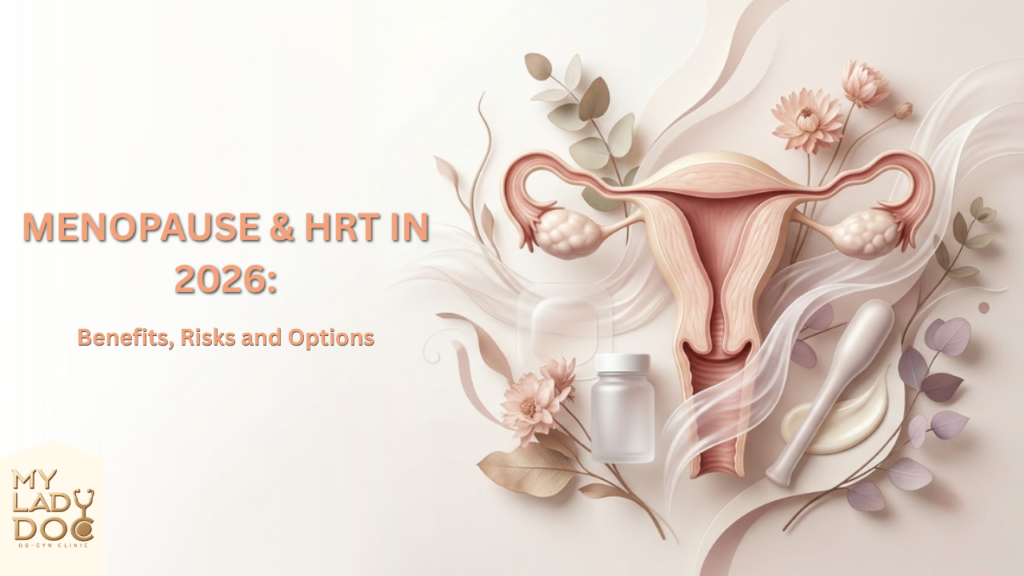
Menopause marks the end of menstrual periods, but the transition leading up to it can bring symptoms that disrupt sleep, mood, work and everyday comfort. Hormone replacement therapy (HRT), also known as menopausal hormone therapy, remains one of the most effective medical treatments for several of these symptoms, particularly hot flashes and night sweats. Whether it’s the right choice depends on your symptoms, age, medical history and the type of treatment being considered.
The conversation around HRT has shifted considerably over the years. Older studies raised concerns that still linger, and many women hear that HRT is simply “too risky” without getting the fuller picture. In reality, the benefits and risks are nuanced, and the decision needs to be individualized rather than based on a single headline about hormones.
This guide covers what happens during menopause, how HRT works, what it can help with, its potential risks, the different ways it can be administered and what to discuss with a gynecologist before starting treatment.
What happens during menopause
Menopause occurs when a woman permanently stops having menstrual periods because ovarian hormone production has declined. It’s usually diagnosed after 12 consecutive months without a period, with no other explanation.
The years leading up to it are called perimenopause, when estrogen and other reproductive hormones fluctuate considerably. Periods may become shorter, longer, heavier, lighter or less predictable, and symptoms often begin well before periods stop entirely.
Common symptoms include:
- Hot flashes or sudden feelings of heat
- Night sweats
- Sleep problems
- Mood changes
- Anxiety or low mood
- Vaginal dryness
- Pain or discomfort during sex
- Reduced sexual desire
- Changes in menstrual patterns
- Urinary symptoms
- Difficulty concentrating or “brain fog”
- Joint or muscle discomfort
Symptoms vary widely between women. Some experience relatively mild changes, while for others menopause significantly interferes with work, sleep, relationships or daily activities, which is exactly why treatment decisions can’t be one-size-fits-all.
How HRT works
HRT provides hormones to relieve symptoms caused by the hormonal shifts of menopause. The main hormone used is estrogen. Depending on whether a woman still has a uterus, a second hormone called progestogen may also be needed.
If you have a uterus and use systemic estrogen, progestogen is generally required to protect the uterine lining from excessive stimulation. Women who’ve had a hysterectomy may, depending on their circumstances, be able to use estrogen alone.
HRT isn’t a single medicine or a single treatment plan. There are different hormones, doses, combinations and delivery methods, and your medical history and symptoms help determine which is appropriate for you.
What HRT can effectively treat
For women with bothersome vasomotor symptoms, mainly hot flashes and night sweats, systemic hormone therapy is among the most effective treatments available. It can also improve sleep problems tied to these symptoms and help with vaginal dryness and other genitourinary issues.
For some women vaginal changes are minor; for others, dryness can cause burning, irritation, discomfort during sex or urinary symptoms. Local vaginal estrogen is one option when symptoms are mainly confined to the vaginal or urinary area, delivering a low dose directly to vaginal tissues rather than exposing the whole body to hormones.
HRT also helps slow the bone loss that accelerates around menopause, reducing the risk of osteoporosis-related fractures while it’s being used. This doesn’t mean every woman should take HRT specifically to protect her bones; the decision depends on overall health and other available options.
Not all HRT is the same
One of the most useful things to understand about HRT is that “taking HRT” doesn’t describe a single treatment.
Estrogen-only therapy
This may suit some women who don’t have a uterus, such as those who’ve had a hysterectomy. Estrogen shouldn’t generally be used alone in a woman with an intact uterus, since it can stimulate the uterine lining and raise the risk of endometrial cancer. Adding progestogen protects that lining.
Combined estrogen and progestogen therapy
Women who still have a uterus usually need both hormones if systemic HRT is prescribed. They can be given separately or together, and the exact regimen also depends on whether the woman is still having periods or has already reached menopause.
Local vaginal estrogen
If the main issue is vaginal dryness, burning, discomfort during sex or certain urinary symptoms, local vaginal estrogen may be considered instead of systemic therapy. Because the dose is low and acts mainly on vaginal tissue, its risk profile differs from systemic hormone therapy, and current guidance recognizes it as an important option for genitourinary symptoms. A woman doesn’t need full systemic HRT just because she has vaginal symptoms.
Tablets, patches, gels and other delivery methods
Systemic estrogen can be given as tablets, skin patches, gels, sprays or certain vaginal preparations. The route matters beyond convenience. Oral estrogen and estrogen delivered through the skin don’t have identical effects on blood clot risk, and current clinical guidance notes that patches, gels and sprays may be preferable to oral estrogen for women with increased clotting risk.
That said, patches aren’t automatically the better choice for everyone. The right option depends on symptoms, medical history, preferences, other medications and risk factors, which is one reason copying another woman’s HRT prescription isn’t a good idea.
Who may benefit from HRT
HRT may be worth discussing when menopause or perimenopause symptoms are affecting quality of life, whether that’s frequent hot flashes, night sweats, sleep disruption, vaginal symptoms or other bothersome changes.
Age and timing matter too. For many healthy women under 60 or within roughly 10 years of menopause onset, without major contraindications, the overall balance of benefits and risks tends to be favorable when HRT is used for appropriate indications. Still, the decision needs to be individualized.
HRT is particularly important to discuss in cases of early menopause or premature ovarian insufficiency, since estrogen loss occurs earlier than expected and can affect bone and cardiovascular health. Women experiencing menopause before age 45 should have a medical discussion about hormone replacement rather than assuming their symptoms are simply something to tolerate.
HRT after 60: it’s not an automatic no
A common misconception is that HRT becomes forbidden after a certain birthday. It’s more nuanced than that. As women age, the balance between potential benefits and risks shifts. A woman starting HRT for the first time later in life may have a different risk profile than one who began treatment around menopause and has continued because symptoms remain significant.
The decision should be based on individual health, symptoms, treatment type and risks rather than an arbitrary age cutoff. Women already on HRT should also have their treatment reviewed periodically; ACOG recommends discussing each year whether continuing hormone therapy remains appropriate given symptoms, benefits and risks.
The risks of HRT
HRT carries real risks, and pretending otherwise isn’t helpful. At the same time, describing it as universally dangerous isn’t accurate either. Risk varies according to:
- Age
- Time since menopause
- Type of hormone therapy
- Estrogen route
- Whether progestogen is used
- Duration of treatment
- Personal and family medical history
- Breast cancer risk
- History of blood clots
- Cardiovascular health
Some forms of systemic HRT carry a small increase in the risk of blood clots and stroke, and this risk is generally lower with transdermal estrogen (patches or gels) than with oral estrogen. Combined estrogen-progestogen therapy is also associated with an increased breast cancer risk, though the degree depends on the treatment and duration, and needs to be weighed against the individual’s overall health. This is exactly why HRT should follow a proper medical assessment.
Breast cancer risk deserves its own conversation
Breast cancer is probably the concern most women associate with HRT, and there’s no single answer that applies to everyone. Combined estrogen-progestogen therapy carries a small increase in risk, varying by type and duration of therapy and individual factors. Women with a history of hormone-sensitive breast cancer generally need a different approach and should discuss menopause symptom treatment with their relevant specialists.
Estrogen-only therapy has a different risk profile than combined therapy, a distinction often lost in general discussions about HRT. Personal and family history should be reviewed before treatment begins.
Blood clots and stroke
Systemic HRT can affect blood clot and stroke risk. Oral estrogen has a greater effect on clotting than estrogen delivered through the skin, so for women with certain risk factors a transdermal option may be considered instead.
Risk factors can include previous blood clots, certain cardiovascular conditions, obesity, smoking, age and other health conditions. Having one risk factor doesn’t automatically rule out every form of hormone therapy; it just means the choice needs careful consideration. ACOG notes that patches, sprays and rings may carry less clot risk than oral forms in some circumstances.
Who may not be a good candidate for systemic HRT
Systemic HRT isn’t appropriate for everyone. Depending on the individual situation, it may not be recommended for women with a history of certain cancers, stroke, heart attack, blood clots or significant liver disease, conditions ACOG specifically lists among situations where systemic hormone therapy is usually avoided.
This list isn’t a substitute for a consultation. Your current health, previous treatment, medications and the exact reason for considering HRT all matter. If you have a history of breast cancer, blood clots, stroke, cardiovascular disease, liver disease, unexplained vaginal bleeding or another significant condition, tell your gynecologist before starting hormone therapy.
Unexpected bleeding shouldn’t be ignored
Some vaginal bleeding or spotting can occur when starting certain forms of HRT, especially in the early months. But not every episode is harmless. Bleeding that’s persistent, becomes heavier, occurs after a prolonged period without periods, or develops after menopause needs medical evaluation.
NICE updated its menopause guidance in April 2026 to address recommendations around unscheduled vaginal bleeding in women taking systemic HRT. The practical message: don’t assume unexpected bleeding is just part of menopause. Tell your doctor. The cause may be related to HRT, but other causes sometimes need to be ruled out.
Possible side effects
Some women experience side effects when starting or changing HRT, including breast tenderness, headaches, bloating, spotting or bleeding, mood changes and other hormone-related symptoms.
Side effects don’t necessarily mean HRT is the wrong treatment; sometimes the dose, hormone combination or route just needs adjusting. What matters is not silently stopping or changing treatment without talking to your doctor first, since a regimen that works well for one woman can be uncomfortable or unsuitable for another.
HRT isn’t the only option
Hormone therapy is one option among several. Some women can’t take HRT, others prefer not to, and some have symptoms that respond better to non-hormonal treatment. Depending on the symptoms, alternatives can include certain non-hormonal medicines, cognitive behavioural therapy, vaginal moisturizers, lubricants, lifestyle changes, exercise, sleep strategies, or treatment aimed specifically at urinary or vaginal symptoms.
Recent NHS guidance also outlines non-hormonal options for women who can’t take HRT, don’t want it, or continue to have symptoms despite treatment. The right alternative depends on the specific symptom, since there’s no reason to treat every menopause symptom with the same approach.
A note on “natural” menopause treatments
The word “natural” can be misleading. Many women consider herbal products or supplements because they seem safer than prescription medicines, but that isn’t automatically true, and evidence for many menopause supplements is limited. Some supplements can also interact with prescription medicines.
If you’re considering an herbal product for hot flashes, sleep, mood or other symptoms, discuss it with your healthcare professional rather than assuming it’s risk-free. Current NHS guidance notes that evidence for many herbal and complementary treatments is limited, and some can cause adverse effects or interact with medicines.
What are bioidentical hormones
“Bioidentical” gets used in several different ways, which adds to the confusion. Some approved hormone medicines contain hormones chemically similar or identical to those produced by the body, but that’s different from assuming every product marketed as “bioidentical” is inherently safer.
ACOG recommends FDA-approved hormone therapy over compounded hormone therapy, since compounded products can vary in strength and purity and haven’t been shown to be safer or more effective than approved options. If someone recommends a compounded hormone product, ask exactly what it contains, why it’s being recommended, and whether an approved alternative exists.
Does HRT cause weight gain
Weight changes are common around midlife, but that doesn’t mean HRT is the cause. Changes in body composition happen with age and menopause on their own: muscle mass can decline, activity patterns shift, sleep often worsens, and fat distribution tends to move toward the abdomen.
NHS guidance notes there’s little evidence that most types of HRT directly cause weight gain. If weight changes are significant or sudden, they deserve a broader health assessment rather than being automatically blamed on menopause, since thyroid problems, metabolic conditions, medications, sleep disorders and lifestyle factors can also play a role.
HRT and bone health
Estrogen plays an important role in maintaining bone strength. When estrogen levels fall around menopause, bone loss accelerates, and over time this can contribute to osteoporosis, a condition where bones become weaker and more prone to fracture.
Systemic HRT can help prevent this bone loss during and after menopause. For women with early or premature menopause, the discussion is especially important since they face estrogen deficiency earlier in life. Still, HRT shouldn’t be treated as the universal answer for osteoporosis; other medicines and bone-health strategies may be more appropriate depending on individual fracture risk.
HRT and heart health: timing matters
The relationship between menopause hormone therapy and cardiovascular health has been misunderstood for years. HRT shouldn’t be prescribed solely to prevent heart disease. At the same time, the risks of starting hormone therapy near menopause aren’t necessarily the same as starting it much later in life.
Age, time since menopause, existing cardiovascular disease, and the type and route of HRT all shape the risk-benefit discussion. ACOG notes that some research suggests a more favorable cardiovascular profile when therapy starts within 10 years of menopause and before age 60, but hormone therapy still shouldn’t be used solely for heart-disease prevention. This is another reason headlines about HRT can mislead when stripped of context.
How to decide whether to start HRT
There’s no single “right” HRT plan for every woman. A gynecologist will usually consider several factors together:
Your symptoms. How often do you have hot flashes? Are you waking at night? Are vaginal symptoms affecting intimacy? Are mood or sleep changes interfering with everyday life?
Your age and menopause stage. Perimenopause, early menopause and postmenopause aren’t identical situations.
Your medical history. Your doctor may need to know about previous cancers, blood clots, cardiovascular conditions, liver disease, migraines, surgeries and other conditions.
Your family history. This can shape discussions about breast cancer and cardiovascular risk.
Your uterus status. Whether you have a uterus affects whether progestogen is needed alongside systemic estrogen.
Your preferences. Some women prefer patches for convenience, others prefer tablets, and some don’t want systemic hormones at all.
A good treatment plan weighs all of this together rather than defaulting to a standard prescription.
You don’t need to “just live with” severe symptoms
Menopause is natural, but that doesn’t mean severe symptoms should simply be tolerated. If hot flashes are waking you several times a night, vaginal dryness is making sex painful, or mood and sleep problems are affecting your ability to work and function normally, these symptoms deserve attention.
Several treatment options exist, and HRT is one of them. The important step is finding out which approach is right for you, rather than deciding that all hormone therapy is either dangerous or necessary.
Questions to ask your gynecologist about HRT
If you’re considering HRT, it helps to arrive at your appointment with specific questions:
- Are my symptoms likely related to perimenopause or menopause?
- Would HRT be appropriate for me?
- Do I need estrogen alone or estrogen with a progestogen?
- Would a patch, gel, tablet or local treatment make more sense?
- What risks are particularly relevant to my medical history?
- Are there non-hormonal options I should consider?
- Which symptoms should improve first?
- What side effects should I report?
- When should my treatment be reviewed?
- What should I do if I develop bleeding?
Bring a list of your medicines and relevant medical history, and mention any previous surgeries, especially hysterectomy, along with personal or family history of breast cancer, blood clots, stroke or heart disease.
Menopause care should be individualized
There’s no prize for choosing the strongest treatment or for avoiding medication altogether. The goal is appropriate treatment. For one woman that might mean systemic HRT; for another, local vaginal estrogen; someone else may do better with a non-hormonal medicine or a combination of lifestyle and medical approaches.
MyLadyDoc’s menopause and HRT services focus on assessing symptoms and individual risk factors before developing a treatment plan. The clinic provides menopause care and HRT consultations through Dr. Hiba Gul, with treatment decisions based on the woman’s needs rather than a one-size-fits-all prescription, which matters because two women of the same age can have completely different symptoms, medical histories and treatment priorities.
The Bottom Line
Menopause is a normal stage of life, but symptoms can be significant enough to affect sleep, emotional well-being, relationships, work and physical health.
HRT remains an important treatment option in 2026. For appropriate women, it can provide substantial relief from hot flashes and night sweats, and can also help with vaginal symptoms and bone health. But it isn’t risk-free, and the safest choice depends on the type of therapy, timing, medical history and individual risk factors.
If you’re struggling with menopause symptoms, you don’t have to decide on HRT based on something you read online or on someone else’s experience. A gynecological consultation can help you understand what’s happening, which treatment options are available, and whether the potential benefits of HRT outweigh the risks for you.

![]Labiaplasty Recovery Guide](https://myladydoc.com/wp-content/uploads/2026/09/Menopause-HRT-in-2026-3-150x150.png)