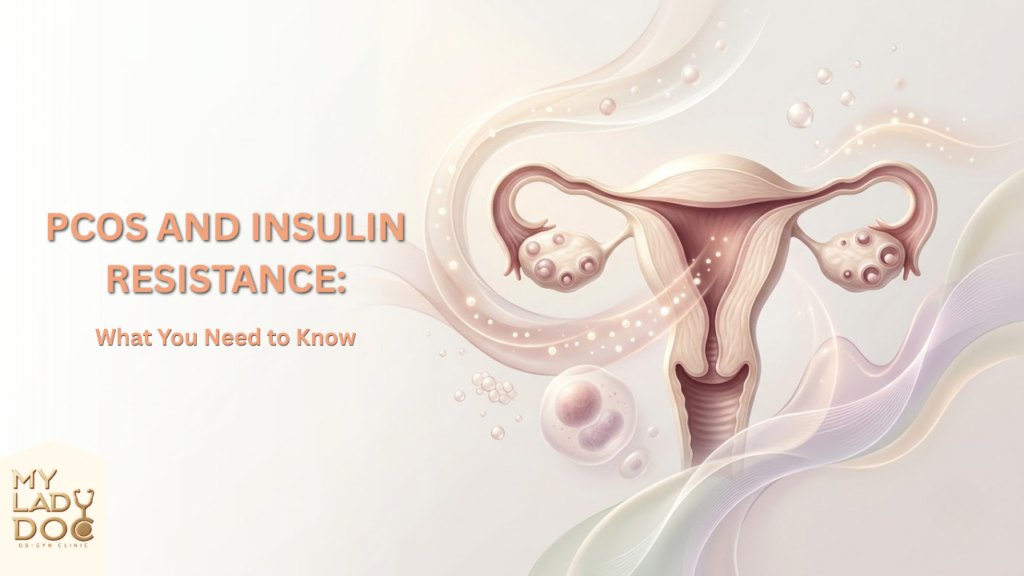
PCOS and insulin resistance are closely connected, but they aren’t the same condition. Insulin resistance is one of the metabolic features that can occur with polycystic ovary syndrome (PCOS), and it can affect periods, ovulation, weight, blood sugar and long-term metabolic health. For many women, understanding this one connection unlocks a lot of what otherwise feels like a confusing diagnosis.
If you have PCOS, you may have heard that insulin resistance explains your symptoms. The relationship is more complicated than that. Not every woman with PCOS has the same degree of insulin resistance, and insulin resistance isn’t required to diagnose PCOS in the first place. Two women can carry the same diagnosis and have very different metabolic profiles.
Understanding this connection can make PCOS treatment much less confusing. The goal isn’t simply to “lower insulin.” Your doctor looks at your periods, symptoms, reproductive goals, blood pressure, blood sugar, cholesterol, weight and other health factors before deciding what actually needs attention, and in what order.
International PCOS guidance recommends attention to metabolic health as part of PCOS care, alongside reproductive, hormonal, psychological and lifestyle concerns. That breadth is part of why PCOS care can feel like it touches almost every part of a woman’s health, not just her periods.
What is insulin resistance?
Insulin is a hormone made by the pancreas. One of its main jobs is helping glucose, or blood sugar, move from the bloodstream into cells where it can be used for energy. Without enough insulin activity, glucose has trouble getting where it needs to go.
Insulin resistance means the body’s tissues don’t respond to insulin as effectively as they should. The pancreas may compensate by producing more insulin to keep blood glucose within a normal range, which doesn’t automatically mean a person has diabetes. It simply means the body is working harder than usual to maintain the same result.
In earlier stages, blood sugar can remain normal even though the body is producing more insulin behind the scenes. Over time, however, insulin resistance can contribute to higher blood glucose and increase the risk of prediabetes and type 2 diabetes if it isn’t addressed.
Many people with insulin resistance have no obvious symptoms at all. Some may notice difficulty managing weight, increased abdominal fat, fatigue, or darkened, thickened areas of skin called acanthosis nigricans, though these signs aren’t specific enough to diagnose insulin resistance on their own. A person can have every one of these features and still not have insulin resistance, or have none of them and still have it.
MyLadyDoc also describes insulin resistance as a condition that can affect metabolic health and may be managed through nutrition, physical activity, weight management, medication when appropriate, and regular monitoring.
How are PCOS and insulin resistance connected?
Insulin resistance is common in PCOS and forms an important part of the condition’s metabolic picture. However, the relationship runs in both directions and is shaped by several factors working together rather than one single cause.
Higher insulin levels can affect the ovaries and contribute to increased production or activity of androgens, a group of hormones that includes testosterone. Higher androgen activity can interfere with normal ovulation and contribute to symptoms such as irregular periods, acne and excess facial or body hair. In effect, insulin and androgens influence each other in a loop that can reinforce itself over time.
At the same time, PCOS itself involves hormonal and metabolic changes of its own that aren’t purely downstream of insulin. Genetics, body composition, lifestyle, sleep, age and other factors can all influence insulin sensitivity, which is why saying “PCOS is caused by insulin resistance” oversimplifies things considerably.
PCOS can occur in women who aren’t overweight, and a woman can have insulin resistance without having PCOS. The two conditions overlap, but one doesn’t automatically imply the other, and treating them as interchangeable can lead to confusion about what’s actually being treated.
The 2023 international PCOS guideline identifies insulin resistance as a pathophysiological factor in PCOS, while cautioning that commonly available insulin assays have limited clinical usefulness and shouldn’t be used routinely as the sole way of assessing insulin resistance.
What symptoms can occur with PCOS and insulin resistance?
There’s no single symptom that proves you have both PCOS and insulin resistance. Symptoms tend to appear in combination, and no one sign is decisive on its own.
PCOS symptoms can include:
- Irregular, infrequent or missed periods
- Difficulty predicting when a period will arrive
- Difficulty becoming pregnant because ovulation may not occur regularly
- Acne
- Increased facial or body hair
- Thinning hair on the scalp
- Weight gain or difficulty losing weight
- Darkened or thickened skin in areas such as the neck or armpits
Insulin resistance itself may cause few noticeable symptoms. Some women notice changes in weight or energy, but these have many possible causes unrelated to insulin. Feeling tired after meals doesn’t by itself mean you have insulin resistance, and neither does abdominal weight gain on its own, since both can result from countless other factors.
This distinction matters because symptoms can overlap with thyroid disorders, sleep problems, nutritional deficiencies, medication effects, stress and other hormonal or metabolic conditions. Trying to self-diagnose from a symptom list alone tends to create more confusion than clarity.
MyLadyDoc lists irregular periods, weight changes, acne, excess hair growth, thinning hair and fertility difficulties among common PCOS concerns.
Does having PCOS mean you have insulin resistance?
No. PCOS and insulin resistance are strongly associated, but not every woman with PCOS has clinically significant insulin resistance, and it’s also possible to have insulin resistance without PCOS at all.
This is one reason a diagnosis shouldn’t rest on one symptom, one blood test or body weight alone. Any single data point tells only part of the story. A woman with a healthy body weight can have PCOS and metabolic risk factors, while a woman with a higher body weight may not have PCOS at all. Weight is one factor doctors consider, not a diagnostic test in itself.
The international guideline specifically recommends avoiding weight stigma and recognizes that PCOS affects women across different body sizes. Healthy lifestyle care is recommended regardless of whether a woman is overweight, precisely because body size alone doesn’t determine metabolic risk.
Why can high insulin affect periods and ovulation?
Insulin interacts with the reproductive hormone system in ways that go beyond blood sugar control. In some women with PCOS, higher insulin levels can encourage the ovaries to produce more androgens, and higher androgen levels can interfere with the normal sequence of follicle development and ovulation.
When ovulation becomes irregular, menstrual cycles may become longer, unpredictable or absent, which can also affect fertility since pregnancy requires ovulation for an egg to be released in the first place.
An irregular period doesn’t prove insulin resistance is the cause. Other conditions can change ovulation too, including thyroid disorders, high prolactin levels, significant weight changes, excessive exercise, stress, perimenopause and certain medications. That’s why persistent menstrual changes deserve a proper evaluation rather than an assumption that they’re simply “hormonal” and can be left alone.
Can insulin resistance make PCOS symptoms worse?
It can contribute to some of the hormonal changes associated with PCOS, particularly in women who have both conditions together. Higher insulin levels may increase androgen activity, which can contribute to irregular ovulation, acne or excess hair growth.
Insulin resistance can also affect blood glucose and lipid metabolism, and over time this may raise the risk of prediabetes, type 2 diabetes and other metabolic problems that extend well beyond reproductive health.
Symptoms don’t always improve in a predictable order as metabolic health improves, either. A woman may see better blood sugar control without immediate changes in acne or hair growth, for example, which can be frustrating if she expects every symptom to resolve at once. This is why PCOS treatment needs to be based on the problems actually affecting you rather than a single number on a lab report.
How is insulin resistance checked in women with PCOS?
This is an area where online advice can become misleading, often because it promises a simple test with a clear yes-or-no answer. There’s no single routine insulin-resistance blood test that reliably answers the question for every woman with PCOS. The international guideline states that clinically available insulin assays have limited relevance for routine care.
Instead, doctors assess metabolic risk using the overall clinical picture rather than one isolated number. Depending on your health and circumstances, evaluation may include:
- Medical history and family history
- Blood pressure measurement
- Body weight and other measurements when relevant
- Blood glucose testing
- HbA1c, which reflects average blood glucose over roughly the previous few months
- An oral glucose tolerance test in appropriate situations
- Cholesterol and triglyceride testing
- Assessment of other metabolic risk factors
For women with PCOS, glucose assessment matters because the condition is associated with increased risk of impaired glucose regulation and type 2 diabetes. The exact tests and timing depend on your age, symptoms, previous results, pregnancy plans and other health factors, so two women in the same clinic might reasonably be offered different combinations of tests. A fasting insulin result alone shouldn’t be used to diagnose or exclude PCOS.
Does everyone with PCOS need an insulin test?
Not necessarily. It’s tempting to search for a single number that tells you whether you’re “insulin resistant,” but insulin levels naturally vary throughout the day and between labs, and laboratory insulin measurements aren’t sufficiently standardized for routine diagnosis of insulin resistance in PCOS.
A doctor may instead focus on blood glucose, HbA1c, an oral glucose tolerance test when appropriate, lipid profile, blood pressure and other risk factors that together paint a clearer picture than an isolated insulin value. The international guideline recommends assessing glycaemic status in women with PCOS and recognizes the oral glucose tolerance test as the most accurate test for this population, including when planning pregnancy or seeking fertility treatment.
Your doctor can decide which tests are appropriate for your situation rather than ordering every possible hormone and insulin test just to be thorough.
Can you have insulin resistance with normal blood sugar?
Yes. In an earlier stage of insulin resistance, the pancreas may produce more insulin to compensate for reduced insulin sensitivity, so blood glucose can remain within the normal range even while resistance is quietly present underneath. A normal glucose result doesn’t necessarily tell the whole metabolic story, which is one reason doctors weigh your overall risk rather than relying on a single measurement in isolation.
Family history of diabetes, previous gestational diabetes, higher blood pressure, abnormal cholesterol, central weight gain and PCOS itself can all influence how closely your metabolic health should be monitored, even when your current blood sugar looks perfectly fine on paper.
What lifestyle changes help with PCOS and insulin resistance?
Lifestyle treatment is a major part of PCOS care, but it shouldn’t be reduced to “just lose weight,” which oversimplifies a much broader set of habits. The 2023 international guideline recommends healthy lifestyle approaches for women with PCOS and notes these can provide metabolic and overall health benefits even when weight loss isn’t the main outcome.
Choose a sustainable eating pattern
There’s no single PCOS diet that works for every woman, despite how often one is marketed as universal. A practical eating pattern usually emphasizes vegetables, fruits, whole grains or other high-fibre carbohydrates, pulses, adequate protein, healthy fats and minimally processed foods. Meals that combine protein and fibre can also help make eating patterns more satisfying and easier to stick with day to day.
You don’t necessarily need to completely remove rice, roti, fruit or carbohydrates because you have PCOS. The amount, type, overall diet and your individual metabolic health all matter more than eliminating entire food groups, and a diet you can maintain for years is usually more useful than a very restrictive plan that lasts a few weeks before becoming unsustainable.
Stay physically active
Regular physical activity can improve insulin sensitivity and cardiovascular health, and the benefits don’t require extreme effort to appear. You don’t need to start with an intense exercise program: walking, strength training, cycling, swimming, dancing or other activities you enjoy can all contribute to a more active routine that you’ll actually keep up with.
Adding resistance or strength training can be particularly useful because muscle tissue is an important site for glucose use, meaning more muscle activity can translate into better blood sugar handling over time. If you’ve been inactive for a long time or have another medical condition, your exercise plan should be adapted to your health and fitness level rather than starting at full intensity.
Take sleep seriously
Poor sleep can affect appetite, energy, mood and metabolic health in ways that are easy to underestimate. Women with PCOS also have an increased risk of obstructive sleep apnea, particularly when other risk factors are present. Persistent loud snoring, waking unrefreshed, morning headaches or excessive daytime sleepiness are reasons to discuss sleep with a doctor rather than assuming poor sleep is simply part of a busy life.
Avoid crash diets
Rapid, highly restrictive diets can be difficult to sustain and may create an unhealthy relationship with food that outlasts the diet itself. PCOS management is usually more successful when nutrition, movement and weight goals are realistic and individualized rather than borrowed from a generic plan.
If weight management is appropriate for you, it should be approached as one part of your overall health, not as a measure of your worth.
Does losing weight improve insulin resistance in PCOS?
For women who are overweight, even modest improvements in lifestyle and metabolic health can be beneficial, and the improvement doesn’t need to be dramatic to matter. Weight loss isn’t required for every woman with PCOS, and treatment shouldn’t assume every symptom is caused by body weight in the first place.
The international guideline emphasizes healthy lifestyle and prevention of excess weight gain in women who aren’t overweight, and states that structured lifestyle support can be beneficial in PCOS just as it is in the general population, regardless of a woman’s starting weight.
If weight is contributing to metabolic risk, a doctor or dietitian can help create a plan that considers your nutrition, activity level, medications, sleep, reproductive goals and other health factors together, rather than focusing on weight in isolation.
Is metformin used for PCOS and insulin resistance?
Yes. Metformin is sometimes prescribed for women with PCOS, particularly when metabolic concerns are present alongside reproductive ones. It improves the way the body responds to insulin and is commonly used to treat type 2 diabetes. In PCOS, it may also help with metabolic outcomes and can benefit some women with irregular cycles.
The 2023 international guideline states that metformin should be considered in adults with PCOS and a BMI of 25 kg/m² or higher for metabolic outcomes including insulin resistance, glucose and lipid profiles. It can also be considered in some adults with a BMI below 25 kg/m², though the evidence is more limited in that group.
Metformin isn’t automatically appropriate for every woman with PCOS. Your doctor will consider why you’re taking it, your metabolic health, other medications, kidney and liver health, reproductive plans and possible side effects before prescribing it. Don’t start, stop or change metformin or another prescription medicine based on an online article, however well-sourced it seems.
Does metformin cure PCOS?
No. Metformin can help manage certain metabolic and reproductive features in some women with PCOS, but it doesn’t permanently remove the underlying condition, and stopping it typically means those features can return.
PCOS is a long-term condition whose symptoms can change over time, and treatment is adjusted according to what matters most at different stages of life. A woman who isn’t currently trying to become pregnant may have different treatment priorities from someone actively trying to conceive, and the same woman’s priorities may shift again years later.
MyLadyDoc describes PCOS treatment as personalized according to symptoms and health goals, with care that may include menstrual management, hormonal treatment, weight management and fertility support.
Can insulin resistance affect fertility?
It can. Insulin resistance and the hormonal changes associated with PCOS can contribute to irregular ovulation, and if ovulation doesn’t happen regularly, it can take longer to become pregnant.
That doesn’t mean PCOS prevents pregnancy altogether. Many women with PCOS become pregnant, either naturally or with appropriate medical support. The right approach depends on whether ovulation is occurring, the woman’s age, ovarian and reproductive health, the partner’s fertility factors and how long pregnancy has been attempted, all of which shape what kind of support might help.
If you’re trying to conceive and have very irregular or absent periods, it’s reasonable to discuss this with a gynecologist rather than waiting indefinitely and hoping things resolve on their own.
What happens if PCOS and insulin resistance are left unmanaged?
The concern isn’t simply irregular periods, even though that’s often the most visible symptom. PCOS is associated with a higher risk of metabolic problems, including abnormal glucose regulation, type 2 diabetes, abnormal cholesterol levels and cardiovascular risk factors. The condition can also affect fertility, psychological wellbeing, sleep and quality of life more broadly.
Irregular periods deserve attention too, because prolonged gaps between periods can sometimes lead to excessive thickening of the uterine lining. This doesn’t mean every woman with PCOS will develop these complications; it means PCOS care should look beyond acne, periods and fertility toward the fuller picture. Regular health assessment can help identify risks early and guide treatment before problems become harder to manage.
Can PCOS and insulin resistance be managed without medication?
Sometimes. Lifestyle changes are a core part of PCOS care and can improve metabolic health whether or not medication is prescribed alongside them. That said, lifestyle treatment doesn’t mean medication is unnecessary for everyone, and some women will need both.
Some women may need treatment for blood glucose, cholesterol, blood pressure, menstrual irregularity, acne, excess hair growth or fertility. The appropriate treatment depends on the specific problem being addressed. A useful PCOS plan isn’t necessarily the one with the most supplements, tests or medications; it’s the one that addresses the woman’s actual health risks and goals with the fewest unnecessary additions.
What about supplements marketed for PCOS and insulin resistance?
Be cautious. The internet is full of supplements marketed for “balancing hormones,” “reversing insulin resistance” or “curing PCOS,” often with confident claims that outpace the actual evidence. Some products have limited evidence behind them, and supplement quality and dosing can vary considerably between brands.
Inositol, for example, has been studied in PCOS, but recommendations about its use depend on the specific goal and the available evidence for that particular use. It shouldn’t be treated as a guaranteed replacement for medical care.
Tell your doctor about supplements you’re taking, particularly if you’re pregnant, trying to conceive, taking prescription medicines or preparing for a procedure, since interactions aren’t always obvious. Natural doesn’t automatically mean safe or effective.
Can a thin woman have PCOS and insulin resistance?
Yes. PCOS isn’t limited to women who are overweight, despite how it’s often portrayed. Some women with a lower body weight can still have PCOS, metabolic risk factors or insulin resistance, sometimes called “lean PCOS,” although it isn’t a separate type of PCOS medically.
A woman’s body size can’t be used to rule PCOS in or out on its own. If you have irregular periods, signs of androgen excess or fertility problems, you may need an assessment even if your weight is within the normal range and nothing about your appearance suggests a problem. The same principle applies to insulin resistance: metabolic health can’t be judged accurately from appearance alone.
What should you ask your gynecologist?
If you have PCOS or suspect you may have it, a consultation can be more useful when you know what you want to understand going in. You can ask:
- Could my irregular periods be related to PCOS or another condition?
- Do I need blood glucose or other metabolic testing?
- Should I have an HbA1c or oral glucose tolerance test?
- Do my symptoms suggest that I’m not ovulating regularly?
- Do I need treatment to protect my menstrual or uterine health?
- Would metformin be appropriate for me?
- What lifestyle changes would make sense for my health?
- Could my symptoms affect fertility?
- How often should my metabolic health be checked?
Bring previous blood reports, medication lists and information about your menstrual cycles if you have them. A simple record of period dates can be surprisingly helpful, even if it’s just rough notes on a phone calendar.
When should you see a gynecologist?
Consider medical evaluation if your periods have become persistently irregular, you’re missing periods without an expected pregnancy, you have new or worsening acne or excess hair growth, or you’re having difficulty becoming pregnant.
You should also discuss PCOS if you’ve been told your blood sugar, cholesterol or blood pressure is abnormal, even if it happened incidentally during an unrelated checkup. Don’t assume a symptom is “just PCOS.” A new or significant change deserves proper assessment because several conditions can look similar on the surface.
If you have symptoms of very high blood sugar such as excessive thirst, frequent urination, unexplained weight loss or significant weakness, seek medical evaluation promptly rather than waiting for a routine appointment.
Taking the Next Step
PCOS and insulin resistance often overlap, but they shouldn’t be treated as two labels that explain every symptom a woman experiences. Good care looks at the whole picture: menstrual cycles, ovulation, androgen-related symptoms, glucose metabolism, cholesterol, blood pressure, weight when relevant, mental wellbeing, sleep and reproductive plans.
The most useful goal isn’t to chase a perfect insulin number. It’s to identify the health issues actually affecting you and address them with evidence-based treatment tailored to your circumstances.
MyLadyDoc provides PCOS care that includes menstrual management, hormonal concerns, metabolic health, weight management and fertility support, with treatment plans tailored to individual symptoms and health goals rather than a fixed protocol applied to everyone.
If you have persistent irregular periods, symptoms of PCOS, concerns about insulin resistance, or difficulty conceiving, discussing these changes with a gynecologist can help you understand what’s happening and which evaluations or treatments are appropriate for you specifically.

![]Labiaplasty Recovery Guide](https://myladydoc.com/wp-content/uploads/2026/09/Menopause-HRT-in-2026-3-150x150.png)